Even though it's been ubiquitous for a number of years at this point, it still feels like generative AI is working on its sales pitch. OpenAI CEO and Elon Musk slapfighter Sam Altman took to X yesterday to offer a new "cool use case" for ChatGPT he recently overheard: "Connect your family calendars and explain your kids' interests."
Maps of apparent electrical resistivity acquired in a pole–pole configuration with a mobile electrode spacing of 0.5 m. Credit: Archaeological Prospection (2026). DOI: 10.1002/arp.70060
For archaeologists, the Coëby cemetery in Brittany, France, is a gold mine for research. It contains several prehistoric stone monuments and earth mounds. In a new study of two unusually large mounds, scientists may have stumbled upon a rare style of funerary monument.
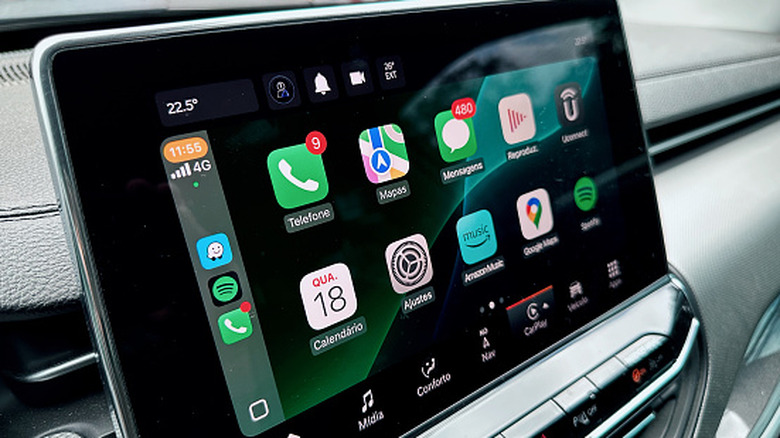
A quick, reliable guide for diagnosing the most common CarPlay connection failures.
Igor Alecsander/Getty Images
Like most features on your iPhone, CarPlay should be straightforward to use once you get it set up. Unfortunately, as with any tech, problems can arise that stop CarPlay from functioning properly. After you get used to the conveniences of Apple's auto software, you can feel stuck in the past when you have to use your phone's display for music and maps instead. And that doesn't even take the safety concerns into account.
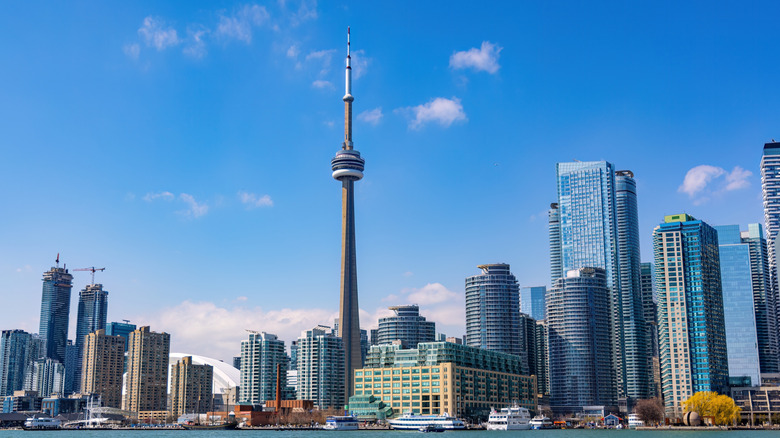
I have lived in Toronto for 30 years and for pretty much all of that time (read: up until about six weeks ago), I believed something that many Canadians grew up learning as fact: Yonge Street is the longest street in the world. But as it turns out, that hasn't been true since 1999. In fact, it's possible that it was never true.
[This story contains spoilers for Spider-Man: Brand New Day.]
How many of Zendaya‘s characters are going to die onscreen this year? Well, fans are speculating that her Spider-Man: Brand New Day character is also going to be taking an early trip to the grave, only a few months after Euphoria‘s Rue and a couple of weeks after The Odyssey‘s Athena.
Extreme heat now poses a greater threat to global food inflation than geopolitical conflict, according to Oxford Economics.
getty
A war choked the Strait of Hormuz. A heatwave erased roughly 9 million tonnes from EU and UK grain forecasts. Oxford Economics now expects the weather to add more to 2027 food inflation than the fading war shock. The next inflation problem may begin not at an oil terminal, but in a field that became too hot to produce a harvest.
Benoît Merlo spent ten years preparing his farm in Auvergne-Rhône-Alpes for a hotter France: cover crops to hold moisture, rotations to spread risk, seed varieties bred for heat and drought. Then came a June in which the thermometer refused to drop. “With temperatures exceeding 38°C for weeks on end, everything is breaking down,” he said in a statement released by the Energy and Climate Intelligence Unit. He expects to lose half of some crops, and up to 70 percent of his soya.