Diesel Jumped 10 Cents Overnight, Could Set New All-Time Record Within Days - Jalopnik
Brandon Bell/Getty Images
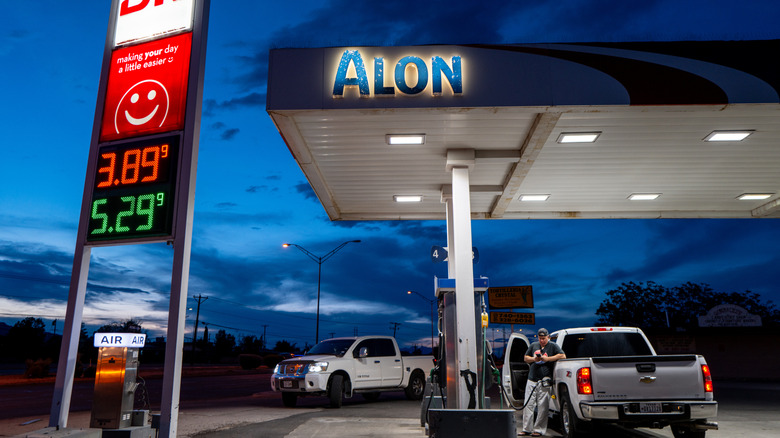
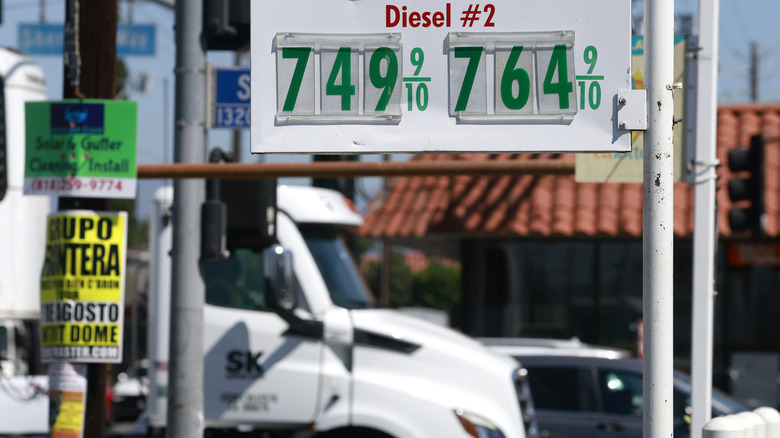
Most people don't drive diesels, and as a result, you might not realize how expensive diesel fuel has gotten. Gas is still expensive, too, but diesel has officially entered "causing some real problems" territory after prices jumped enough overnight to increase the national average by almost 10 cents. Wednesday, we were looking at a still-expensive $5.6879 for a gallon of diesel nationally. Today, it sits at $5.7862. That alone isn't great, but it could soon lead to more serious problems than your least favorite neighbor not being able to fill his lifted Ram 2500.
Don't get me wrong, as someone who lives in the land of lifted bro trucks, I'm not above a little schadenfreude. They voted for this, and I hope they're miserable right now. The problem is, the U.S. uses diesel for more than fueling Child Crusher 9000s. This country basically runs on diesel. And whether the average price of diesel crosses $5.8159 and sets a new all-time record or not, we've reached a point where fuel costs are going to be a real issue going forward.
A year ago, the average cost of a gallon of diesel was $3.7047. But six months into Republicans' stupid war, airstrikes hit several refineries in the Middle East. At the same time, Ukraine's been striking back at the invading Russia, taking out some of its refineries in the process and effectively ending Russia's ability to export diesel. As NBC News put it:
Russia is the world's second largest exporter of diesel fuel after the U.S., Brew noted. With key Russian oil refineries forced offline, the result has been a massive reduction in Eastern European diesel exports, he said.
Meanwhile, U.S. diesel stockpiles in late August had fallen to seasonal levels not seen since the 1980s, according to the federal Energy Information Administration.
As global demand for diesel remains steady, the current supply shock means that refiners in the U.S. and Canada can charge a premium for their diesel products.
"There are more alarms going off for diesel than for other crude oil products," energy analyst Gregory Brew told NBC News.
Perfect timing, no notes
Justin Sullivan/Getty Images
Disruptions in oil supply are one thing, but even if you have infinite oil, you still have to refine it. And at the moment, it appears diesel production is largely limited by refinery capacity. Many are running above 100%, earning big profits for the oil companies, but they can only refine so much so fast. Retailers may be able to take a temporary hit to their profit margins, but they've been doing that since Trump announced his tariffs, and six months of higher fuel prices have only put them in a tougher postition.
As a result, the experts NBC News spoke with said to expect groceries to get more expensive, along with many other products that you buy. That's partly because of transportation costs but also because farmer owners are going to need a whole lot of diesel to bring the fall harvest. Conveniently, the fall is also the same time school starts up again, and most school buses still run on diesel, too. So demand's going up whether diesel stays expensive or not. According to NBC News, September could just be the beginning:
The increased cost of producing food this Fall will likely be reflected in prices next Spring, too.
J.P. Morgan analysts recently warned that the global food inflation is expected to hit 5% in the first half of 2027, nearly double the rate in the first half of this year.
More immediately, however, the key month for diesel demand will be October, when home heating, seasonal agriculture and global shipping ahead of the holidays all overlap.
Meanwhile, speaking to Politico, transportation analyst Dean Croak said we can't forget about the truck-driver shortage, either. Combine that with spiking fuel prices, and he said diesel could be the "sleeper issue" that defines energy prices and inflation this fall. "We've never seen this," Croke told Poltico. "What you're seeing is a real squeeze going on right now."
Running out of options
Atlantic Council
While current diesel prices make gas look affordable, it's still not great. According to AAA, for the first time ever, the national average for a gallon of gas stayed above $4 a gallon for the entire month of August. That's a new record, even if it's a depressing one. Similarly, every state will likely feel the effects of the growing diesel crisis. As the nonpartisan Atlantic Council put it in a recent report:
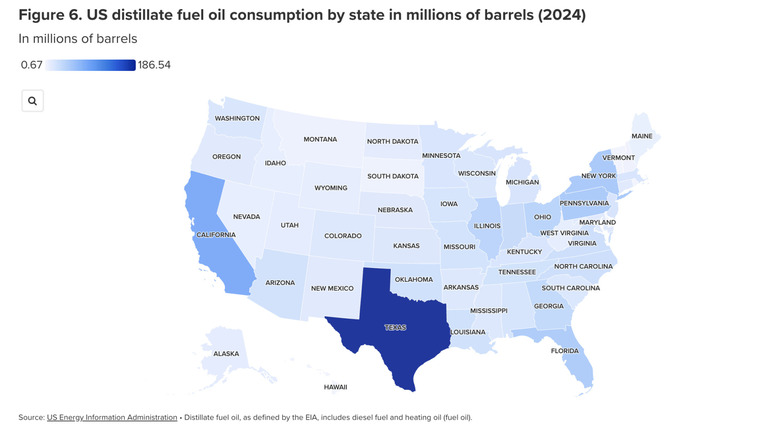
While Alaska and other rural states are particularly impacted by rising diesel costs, all states will feel a blow. Total distillate fuel oil usage closely tracks population size, as Texas, California, and New York are the largest consumers. While some will feel a diesel crisis more than others, very few Americans will be insulated due to its impact on inflation.
As you can see in the figure above, however, distillate fuel oil (the precursor to diesel and home heating oil) may be more popular in the northeast, and Calfornia could be in trouble, but one state stands out as the top consumer of distillate fuel oil — Texas. Personally, if I were trying to win an important election in Texas, I probably wouldn't turn the "diesel prices" knob all the way to the right, but what do I know? Maybe this is all some sort of 4-D chess move I just don't understand.
Sadly, the people who understand these things professionally told Politico that the situation could get far worse in the next couple of months. But I'm sure none of this stuff will ever happen, and I'm sure it'll be fine:
Now, some refineries are even delaying regular seasonal maintenance, raising the chances of an accident that could deliver an outsize price shock. And a strong hurricane churning toward the Gulf Coast could trigger the shutdown of numerous facilities in the world's largest refining hub.
But the prospect of fuel shortages is growing by the day. And the Trump administration doesn't have many more tools at its disposal, having ruled out limits on petroleum exports. But there's one fix that almost no one would choose.
"The fastest road to a lower price," Book said, "could be a recession."