France and Spain race to control wildfires as fresh heatwave hits, as UN warns ‘the climate alarm is blaring’ – as it happened
From
7h ago'The climate alarm is blaring, from every direction,' UN climate chief warns

Damian Carrington
Environment editor
The costs of the climate crisis are now reaching national emergency levels, the UN’s climate chief Simon Stiell said on Tuesday.
“The climate alarm is blaring, from every direction. Around the world, climate-driven disasters are reaching nightmare proportions, as the costs of humanity’s addiction to burning coal, oil and gas keep spiraling upwards.
These record-breaking wildfires tearing through France, Spain and other parts of Europe, forcing mass evacuations and hammering regional and national economies, follow brutal heatwaves that have dried out landscapes.
With the mercury set to soar again this week, the awful costs of this climate crisis – both human and economic – are now reaching national emergency levels.”

Stiell said the whole globe is suffering the impacts of global heating.
“In North Africa, temperatures are approaching 49°C, putting lives and livelihoods in grave jeopardy. In Chile, deadly storms have destroyed homes and lives. While in Japan, records are tumbling as temperatures soar. These spiraling disasters are now the lived reality for billions in a world getting rapidly hotter.
The science on the cause is unequivocal: global heating is making protracted heatwaves, severe floods and violent mega-storms more frequent, more intense and more costly.
What needs to be done is equally clear: leave coal, oil and gas behind faster, scale up renewables, and protect people where the impacts are already hitting hardest.”
Key events
1h ago
Closing summary
1h ago
Gironde fire 'stabilised,' but firefighters continue to battle blaze, local authorities say
2h ago
'No leniency toward those who endanger lives,' France's interior minister says as 184 people detained since beginning of summer over suspected arson
2h ago
Firefighters in France, Spain battle blazes as fresh heatwave hits - in pictures
3h ago
Online petition calling for hunting ban in French wildfires areas get over 210,000 signatures
3h ago
Spain ends evacuation orders for 13 affected municipalities
4h ago
' It’s a little bit like a mourning of sorts,' winemaker says after losing most of his farm to wildfires
4h ago
'More people are starting to think: is this climate change?'
4h ago
Effects of large-scale wildfires may linger for years, scientists warn
5h ago
The Red Cross deploys in Spain, France to provide emergency shelter, food, water, care to evacuees
6h ago
Lège-Cap-Ferret reports 'a significant flare-up' in area
6h ago
Heatwaves returns to western Europe - infographic
6h ago
EU offers update on pooled resources deployed to help fight fires in France, Spain
7h ago
'The climate alarm is blaring, from every direction,' UN climate chief warns
7h ago
Spain's Sánchez says authorities 'begin to see light at the end of the tunnel,' but warns about urgency of responding to climate emergency
8h ago
Emergency reception areas for thousands of evacuees near Bordeaux - in pictures
8h ago
'Is this how the world ends?' Tourists caught up in wildfires speak to the Guardian
8h ago
Firefighters tackle blazes in south-western France - in pictures
9h ago
4,000 people evacuated from campsites in Lacanau near Bordeaux
9h ago
Progress in fighting fires near Madrid 'reasonably positive,' minister says
9h ago
Situation near Madrid 'gradually improving' leaving authorities 'more optimistic', regional president says
10h ago
Race against time to contain wildfires in France and Spain - The Latest
10h ago
France in 'a race against time' before fourth heatwave hits
10h ago
'Degraded' air quality in area affected by blazes
10h ago
Morning opening: 'Coming weeks will be tough,' Macron warns, as France enters new heatwave amid fires
Closing summary

Jakub Krupa
And, on that note, we will be closing the blog for today.
-
The evacuation of nearly 4,000 people from tourist sites on France’s Atlantic coast is under way (10:39) as the return of winds and extreme heat jeopardised firefighters’ battles to contain wildfires raging to the west of Bordeaux.
-
The authorities remain cautiously optimistic about the progress they are making (10:05, 10:24, 12:27, 18:07) as firefighters race to control wildfires before the fourth heatwave hits both countries (9:36, 13:27) and local flare-ups endanger the operation (13:40).
-
In parts of Spain, local evacuation orders were lifted, with first residents set to return in coming hours (16:21), but tens of thousands remained displaced (11:55).
-
Pooled resources managed by the EU continue to be deployed to both affected countries (13:10).
If you have any tips, comments or suggestions, email me at [email protected].
I am also on Bluesky at @jakubkrupa.bsky.social and on X at @jakubkrupa.
Gironde fire 'stabilised,' but firefighters continue to battle blaze, local authorities say
Sophie Brocas, the prefect of the Nouvelle-Aquitaine region, said the situation was “stabilised,” but warned that the fight against the blaze continues.
Speaking at a press conference in Lège-Cap-Ferret, Brocas said the fire was still “stabilised,” and was not spreading, despite some localised issues.
She said there were 14 flare-ups, mostly in areas previously affected by fire.
Nearly 3,000 firefighters are involved in the response, with 23 aircraft.
“The situation remains complicated, that is obvious, and we are not out of the woods yet, but there is good news as well,” she said.
Brocas said the north of the region remained safe for tourism, but said all visits need to follow what the authorities say.
She also pointed out that starting midday on Wednesday, the region will once again be covered by extreme heat warning, with associated precautions needed.
'No leniency toward those who endanger lives,' France's interior minister says as 184 people detained since beginning of summer over suspected arson
French interior minister Laurent Nuñez said 184 people have been detained since the beginning of the summer, as he stressed the authorities would show “total determination to identify every arsonist” contributing to the wildfires.
“No leniency toward those who endanger lives, expose our firefighters to risk, and destroy our heritage,” he said in a strongly worded post on X.
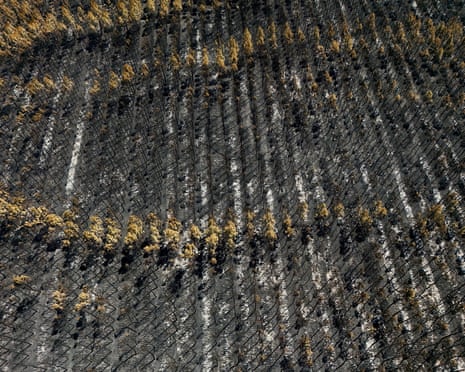
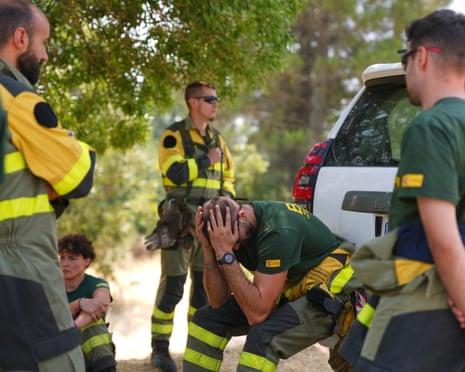
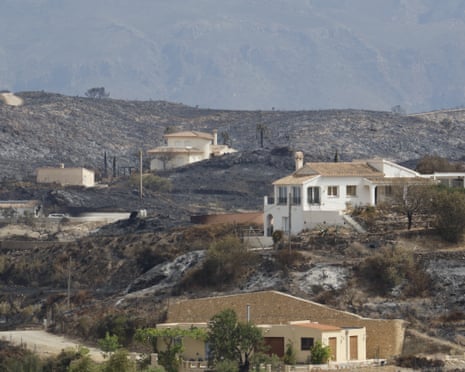
Firefighters in France, Spain battle blazes as fresh heatwave hits - in pictures
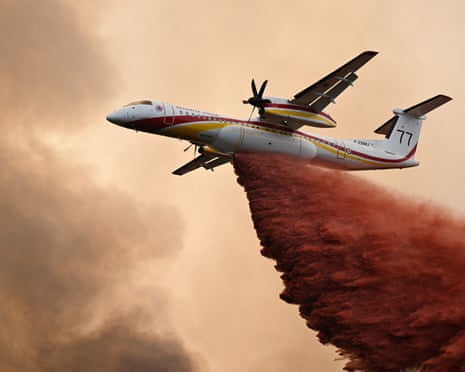
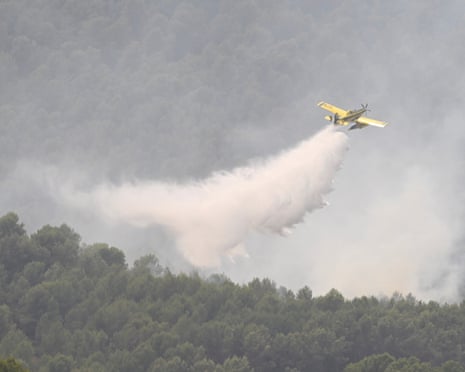
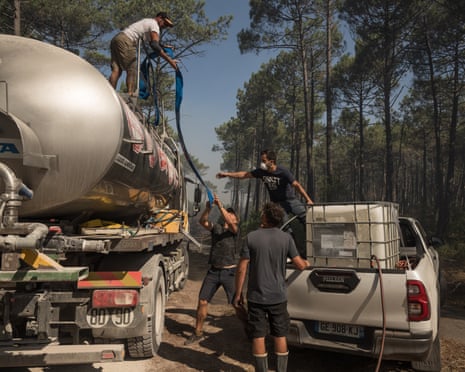
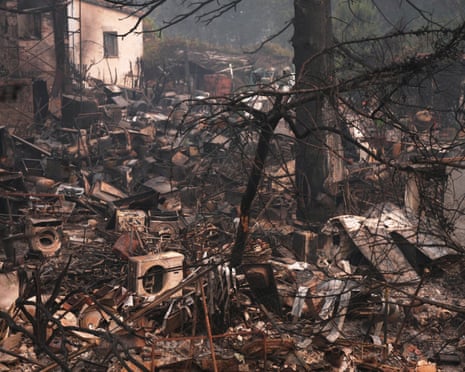
Over in Spain, El País is reporting that the death toll from the Los Gallardos fire in Almería earlier this month has risen from 13 to 14 after another person with severe burns died in hospital.
The authorities did not reveal the age or the nationality of the victim, which was admitted in a critical condition with burns covering 70% of her body.
The fire began in early July and was only extinguished over the weekend.
Online petition calling for hunting ban in French wildfires areas get over 210,000 signatures
An online petition calling for a total ban on hunting in the areas affected by the wildfires in western France is gathering momentum with more than 210,000 signatures so far.
The signatories also ask for a protection zone to be created around the burned areas and a three-year moratorium to help affected areas regenerate from the blaze.
“Behind the charred trees, there are survivors. Animals that miraculously escaped the flames, exhausted, starving, deprived of their shelters and water sources. For them, each day is a struggle for survival,” the petition reads.
“The forest needs silence to heal. It needs peace, not hunting,” it added.
Meanwhile, Le Figaro reported that firefighters have been mobilised to tackle a new fire near the Souge military camp, west of Bordeaux, which houses the 13th Parachute Dragoon Regiment, part of the French special forces.
Water drops are ongoing in a bid to stop the fire, it said.
Spain ends evacuation orders for 13 affected municipalities
Meanwhile, Spain has ended evacuation orders for 13 municipalities in two areas hit by wildfires – eight in Madrid and five in Ávila – starting from 5:00 pm local time (4pm UK).
The lifting of the order means “residents can begin returning to their homes,” the ministry told AFP, without specifying how many residents were affected.
At a Civil Guard checkpoint near Chapineria and Navas del Rey – two villages that were fully evacuated several days ago – a queue of more than 20 vehicles quickly formed after authorities announced the measure, according to an AFP reporter at the scene.
El Mundo reported that some 34,000 Madrid residents will benefit from this lifting of restrictions, while another 21,000 will remain under confinement or evacuation measures.
Restrictions and evacuations order remain in several other areas.
' It’s a little bit like a mourning of sorts,' winemaker says after losing most of his farm to wildfires
Jane Clinton
Antoine Latipau, 43, an organic winemaker and olive grower on the Domaine de l’Encantade farm in Trévillach, the French Catalan south, predicts the whole area may become inhospitable to vines in the next 50 years.
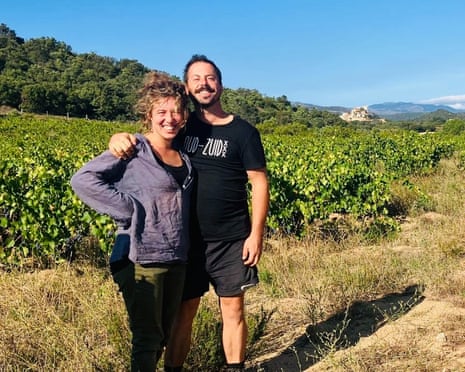
He has lost 11 hectares (27 acres) of his 15 hectares (37 acres) of land in the recent wildfires.
“At first, I thought I was coping very well because I have a very optimistic and positive nature.
But after a week, my wife and I started to become extremely tired. We had no energy left. It’s a little bit like a mourning of sorts, where you have to go through many stages.
At the moment, things are a sort of in-between zone: we are actively planning the future, but we also have to keep working with what we have left. So it’s a bit strange. I have to be calm because I have to keep working.”
He said they used to have eight hectares (19.8 acres) of vines, and now have “about one and a half hectares left” (3.7 acres). The vineyard produces red and white organic wines, and also vermouth, sherry and port.
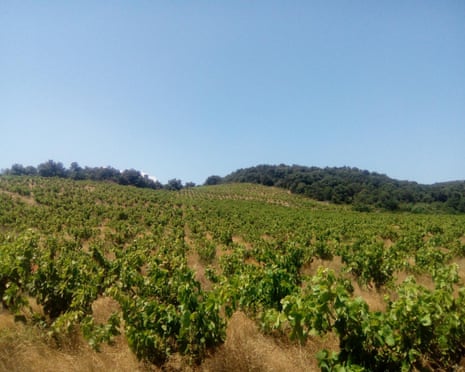
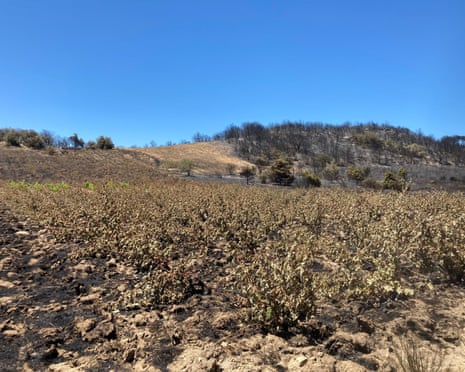
“We will have a small harvest this year, but we still will have a harvest,” he adds. “We still have a few olive trees, almond trees, and animals. The farm animals – four cows – are all OK.”
On Saturday 4 July, Antoine was on his way to water the young vines in the evening when he “noticed a large plume of smoke in the distance”.
“Once I noticed the fire brigade had sent a plane, and helicopters were also flying past, I thought, good, they’re going to beat this wildfire. I was wrong. There was a moment of, I would not say panic, but almost, where the fire was approaching about 500 meters from the farm on the other side of the hill.”
He said it took a week for the fire to be brought under control and a further “three to four days for it to be extinguished”.
Latipau has noticed a change in rainfall and wildfires over the decades.
“The area has burned at least three times in the past 20 years, and every single time it burned, it has got worse.”
He continued:
“As winemakers, we in the Catalan south of France are at the forefront of climate change.
We’ve been adapting ourselves to earlier harvests, different ways of making wine under a hot climate, for example not having too high alcohol yield levels in the wines, and also we have to adapt our way of approaching the cultivation of vines.
But ultimately, the whole area of the region will become inhospitable to vines, and vines will disappear from parts of the region, maybe within the next 50 years.”
He added of this current situation:
“I have been doing this for eight years. I’m a young farmer, and I’m 43, which is not very young. Most farmers do it out of love - it’s a labour of love, and it might sound clichéd, but we are a dying population. Farmers are disappearing from the landscape.”
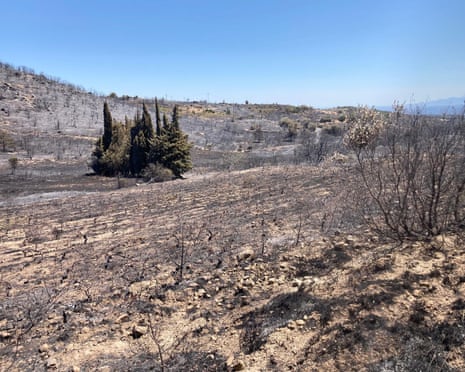
He concluded:
“I’m living as a farmer, and I will die a farmer. So I’m not planning on changing that, just adapting.”
'More people are starting to think: is this climate change?'
Joe Pinner
Lucy, 42, was flying home to France with her three children on Sunday, after visiting family in the UK, when she first saw that something was wrong.
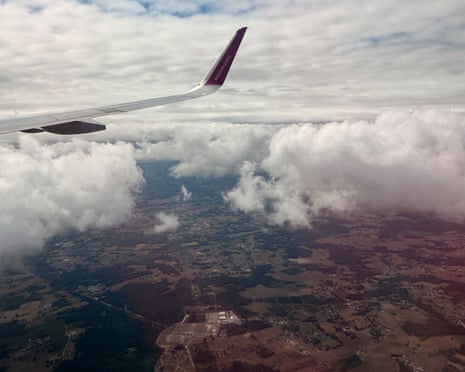
“The pilot warned us about the smoke, but nothing prepared us for what we were about to see,” she said. “Thick black smoke blanketed the sky, while the sun glowed an eerie orange-pink through the haze.”
“As the plane touched down, a collective gasp spread through the cabin. When the doors opened, the smell hit us immediately. The overpowering stench of fire filled the air.”
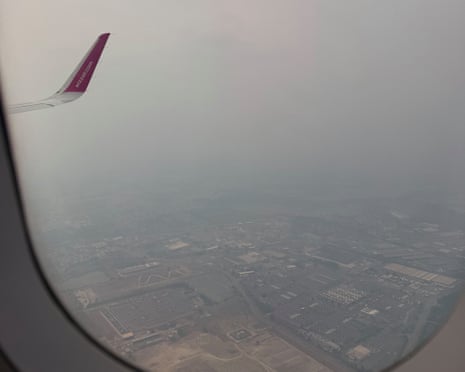
Lucy, who has lived in France for 18 years and is married to a Frenchman, recalled that on the taxi journey home, she noticed the roads were unusually quiet. However, when the family approached the turn-off towards Toulouse, they saw hundreds of cars at a standstill, perhaps, she said, trying to escape the smoke and head south.
Arriving home, they found their garden and cars coated in ash, with black residue accumulating at the bottom of her pool.
“Seeing the ash falling, and the smell of the smoke, it was just really scary.”
Lucy’s nine-year-old daughter had trouble sleeping that night.
“I had put the news on and I didn’t think she was listening, but she obviously was. She was worried about the house burning, and of having to be evacuated in the middle of the night, like people had to on the west side of Bordeaux.”
“They showed videos of policemen running into houses, so I think she was terrified that would happen.”
Lucy has been involved in the local response, bringing food and water for the firefighters, who have been working “nonstop for three days. I baked a lemon drizzle – how British of me!”
This year’s wildfires have changed how people she knows think about climate change, Lucy said.
“Previously, when we’ve had wildfires, it’s been brushed off quite quickly by people.
But now, more people are starting to think: is this climate change? Is this a direct result? And you can’t really ignore the facts, can you? You know, it’s here. This is what we’re living in.”
Effects of large-scale wildfires may linger for years, scientists warn

Oliver Milman
A spate of ferocious wildfires across North America and Europe, worsened by the climate crisis, have incinerated homes and forests and forced thousands of people to flee. Previous fires suggest the effects of these blazes may linger for years to come.
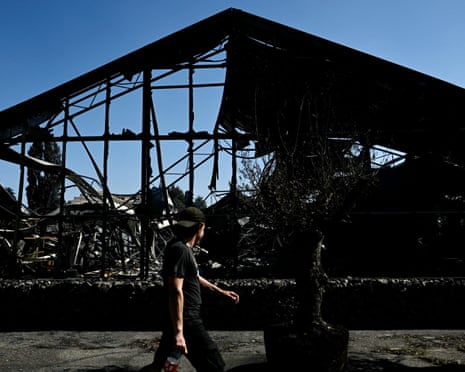
The climate crisis, caused by the burning of fossil fuels, is known to be creating more fire-prone conditions around the world by drying out soils and plants.
Scientists have also long been aware of the unhealthy consequences of wildfire smoke, which can trigger severe respiratory and cardiac problems in affected people. A recent study found that exposure to tiny particles carried in wildfire smoke will raise the risk of hospitalisation for older people hundreds of miles away from fires.
“The cardiovascular toll of wildfire smoke reaches well beyond the fire lines and well beyond the day the sky turns orange,” said Kai Chen, associate professor of epidemiology at the Yale School of Public Health and study co-author.
But identifying the ongoing effects of wildfires long after they have been extinguished has been a more recent understanding. There are continuing challenges in Maui, the second largest of Hawaii’s islands, three years after wildfires there caused more than 100 deaths and razed several thousand buildings, a new report highlights.
While living and economic conditions have generally improved since the fires, many people in Maui are still struggling with health concerns such as poorer lung functions, higher blood pressure and mental health challenges, according to the Maui Wildfire Exposure Study, led by researchers at the University of Hawaii and released on Monday.
“The progress is real, and it should be recognized,” said Alika Maunakea, co-director of the study and a school of medicine professor at the University of Hawaii. “But the biological, emotional and social consequences of a disaster do not disappear on the same timeline as debris removal or reconstruction.”
Nearly half of all adults in the Maui study continued to report depressive symptoms, with nearly one in five differing from post-traumatic stress. The study, which conducted screenings of more than 2,500 participants, also found severe depressive symptoms and post-traumatic stress increased among children and adolescents, as did blood pressure readings and obesity levels.
The researchers stressed that long-term monitoring and intervention is required following a major wildfire event due to impacts that can last for years afterwards.
While the skies over North America and Europe will eventually clear of smoke after a tinderbox summer of fire, this climate change-driven era of wildfire is set to exact a lengthy toll.
And here is the latest depiction of the situation in Spain, as intense heat and dryness push fire danger levels to very high or extreme.
Joe Pinner and Jane Clinton
Alexandra, 44, was holidaying with family members when she decided to cut her break short on Friday after seeing an “apocalyptic” scene on the sand dunes near her resort at Lacanau Océan, in the Gironde region in south-west France.
“The sky just changed colour and the smoke was really intense. There was ash falling from the clouds, and the beach was littered with black soot where the waves normally leave seaweed,” she said.
“It was oddly haunting and beautiful, but also obviously quite terrifying.”
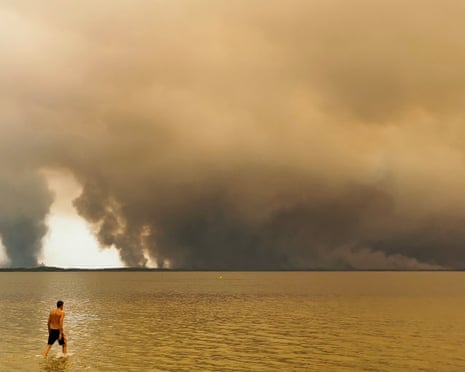
Alexandra and her partner booked a flight back to the UK and headed to Bordeaux, where they booked into an airport hotel, thinking they had “done the right thing and gotten out of the way”, but the fire had followed them east.
An emergency alert on their mobile phones woke them up at 2.45am, informing them that the area around the airport was under an evacuation order. They joined other guests downstairs. “There were a lot of people confused, waiting in reception, not knowing what was happening,” she said.
They were taken by a taxi to the Bordeaux exhibition centre, and spent several hours waiting for sunrise with hundreds of other evacuees from the local neighbourhood, before travelling to the airport on Saturday morning.
“It was really heartening to see how well people were being looked after,” she said. “Hopefully the light rain will help the firefighters get this blaze under control. They must be exhausted.”
The Red Cross deploys in Spain, France to provide emergency shelter, food, water, care to evacuees
Damian Carrington
Environment editor
The Spanish Red Cross has set up 78 emergency shelters hosting more than 4,400 people in response to the wildfires around fires around Madrid, Ávila, Toledo, and Castellón.
Earlier, the UN climate chief said “the awful costs of this climate crisis are now reaching national emergency levels” (12:44).
The Red Cross efforts have involved 690 staff and volunteers in Spain, providing food, water, health care and psychosocial support in coordination with national and regional authorities.
In Gironde and Landes in France, 300 Red Cross volunteers are supporting evacuations and setting up emergency accommodation, as well as preparing support for people whose homes have been damaged or destroyed.
“This is a pattern we are seeing more and more across Europe: heatwaves, drought and wildfires feeding into one another, and communities bearing the consequences,” said Maria Alcazar Castilla, from the International Federation of Red Cross and Red Crescent Societies.
“The Red Cross is responding to the immediate emergency, but we also need sustained investment in preparedness and climate adaptation, so communities are better able to withstand future shocks.”
Lège-Cap-Ferret reports 'a significant flare-up' in area
The French town of Lège-Cap-Ferret has just warned about “a significant flare-up” in the area in sharp contrast to more encouraging signals in the last few hours.
In an update on social media, the authorities stressed that residents are still not authorised to return to the area, as the evacuation order remains in place.
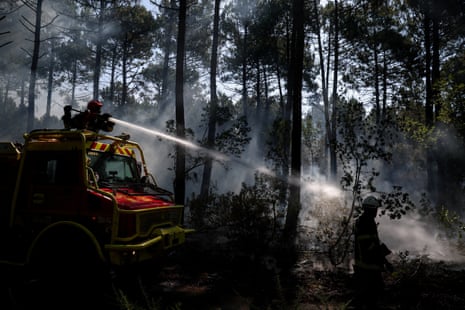
Heatwaves returns to western Europe - infographic
EU offers update on pooled resources deployed to help fight fires in France, Spain
The EU has just given an update on its resources involved in emergency response operations in France and Spain.
EU spokesperson Anna-Kaisa Itkonen said there are a number of planes and helicopters involved in both countries.
In France, this includes two air tractors from Portugal, two Black Hawk helicopter from Slovakia and Czechia (one each), one Canadair plane, and two scooping planes from Sweeden, with more mobilised via the EU’s Civil Protection Mechanism, including an advancted technical team from Sweden, two helicopters from Germany, and two air tractor planes from Turkey.
In Spain, there are two Canadair planes from Greece, two Canadair planes from Italy, and more via the CPM, including two air tractor planes from Turkey, three ground forest firefighting teams from Portugal, and a ground team from Serbia.
She added that it’s “important to clarify that no country can maintain alone all the resources that are needed to tackle every possible natural or other disaster and crisis.”
“This is where the strength of the European system comes to play, because we are pooling the resources, and we are pooling the resources beyond the 27 member states.”
She added:
“We are in very, very close contact all the time. And depending on the situation, we will be able to match these requests with equipment.”
'The climate alarm is blaring, from every direction,' UN climate chief warns
Damian Carrington
Environment editor
The costs of the climate crisis are now reaching national emergency levels, the UN’s climate chief Simon Stiell said on Tuesday.
“The climate alarm is blaring, from every direction. Around the world, climate-driven disasters are reaching nightmare proportions, as the costs of humanity’s addiction to burning coal, oil and gas keep spiraling upwards.
These record-breaking wildfires tearing through France, Spain and other parts of Europe, forcing mass evacuations and hammering regional and national economies, follow brutal heatwaves that have dried out landscapes.
With the mercury set to soar again this week, the awful costs of this climate crisis – both human and economic – are now reaching national emergency levels.”
Stiell said the whole globe is suffering the impacts of global heating.
“In North Africa, temperatures are approaching 49°C, putting lives and livelihoods in grave jeopardy. In Chile, deadly storms have destroyed homes and lives. While in Japan, records are tumbling as temperatures soar. These spiraling disasters are now the lived reality for billions in a world getting rapidly hotter.
The science on the cause is unequivocal: global heating is making protracted heatwaves, severe floods and violent mega-storms more frequent, more intense and more costly.
What needs to be done is equally clear: leave coal, oil and gas behind faster, scale up renewables, and protect people where the impacts are already hitting hardest.”
Spain's Sánchez says authorities 'begin to see light at the end of the tunnel,' but warns about urgency of responding to climate emergency
Spanish prime minister Pedro Sánchez has just said the authorities “can begin to see the light at the end of the tunnel in the fight against wildfires.”

Speaking at a press conference in Madrid, Sánchez said there were still “complex days and hours ahead” as the emergency response continued amid concerns about the impact of the upcoming fourth heatwave.
He said the authorities “will continue to mobilise all resources until the last flame is extinguished.”
He also repeated that the fires serve as a strong reminder that the government urgently needs to plan for the climate emergency, which he says is “worsening year after year.”
He urged local governments to fall behind the government’s strategy on climate, saying that “climate denial is the worst fuel against the climate emergency.”
“Denying reality and the alarms raised by scientists do not prepare us; on the contrary, it leaves us much more vulnerable and our population much more at risk.”