Oil News: Bad - Jalopnik
Thearon W. Henderson/Getty Images
It's been a busy weekend for a lot of us, especially now that football's back. Michigan won, Ohio State lost, and Florida State fired its athletic director. Most importantly, though, Georgia rolled over its second cupcake in a row without once looking like it might lose an easy game. But now it's Monday, which means we have to go back to caring about "important" things that "actually matter" or whatever. You know, like catching up on what happened with Republicans' beloved war with Iran and how much it will cost to fill up your tank. Unfortunately for all of us, the oil news is bad.
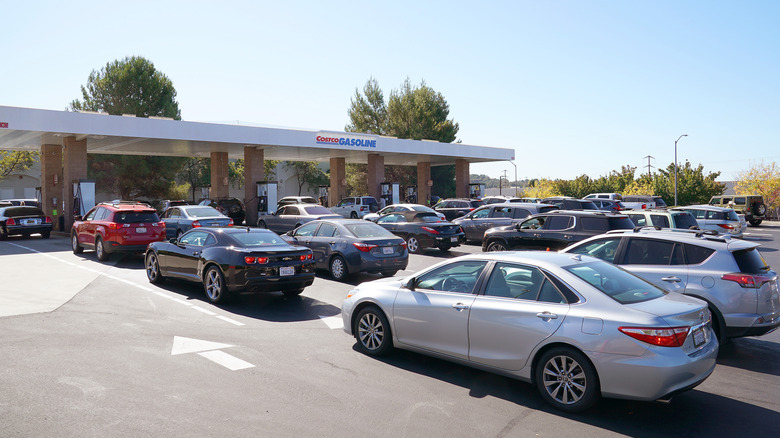
To be clear, I'm not talking about prices, specifically, although those are also headed in a concerning direction. According to AAA, the national average has risen to $4.32 a gallon, with premium coming in at $5.19 and diesel an eye-watering $6.23. That's not great. Nor is it encouraging that regular gasoline is $0.17 more expensive than it was a week ago and diesel prices climbed $0.16. The line's going in the bad direction, and that's only going to make everything else we buy more expensive. Including previously inexpensive used electric vehicles.
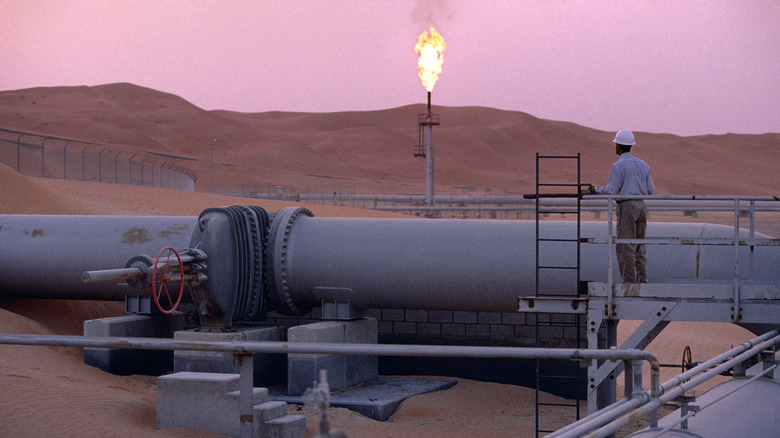
What's more concerning, though, is that all the other news has "pricier fuel" written all over it, too. Last week, Houthi rebels successfully attacked the East-West pipeline that Saudi Arabia uses to circumvent the Strait of Hormuz. Now, Reuters reports the Saudis have had to shut that pipeline down, likely taking 4% of the world's oil offline. If you were hoping oil and therefore gas would get cheaper soon, a major oil pipeline going down is about the last thing you want to hear about right now.
More bad oil news
Reza/Getty Images
As a news outlet, Reuters isn't exactly known for hyperbole or editorializing, but even that article warned that "[a] further decline in Saudi flows will worsen the global supply crunch, which has already pushed global fuel prices to record highs, spurred inflation around the world and sent U.S. bond yields to the highest levels since the 2008 financial crisis."
The Saudi government hasn't released detailed information on how much damage the East-West Pipeline suffered or how long it will take to repair, but it could be challenging since the Houthis reportedly hit several pumping stations, not just the pipeline itself. One expert Reuters spoke to said they believed the Saudis would probably be able to bring the pipeline back online, at least partially, relatively quickly, but another said repairs will likely take five or six weeks.
Houthis rebels also captured the island of Mayun and strengthened their control over the Bab el-Mandeb Strait that guards the entrance to the Red Sea. The Houthis have said the strait is only closed to Saudi shipping, but it's still concerning for the international community. Saudi Arabia typically produces about 10% of the world's oil, and further escalation threatens to take even more oil out of the global supply. The U.S. has also rejected Saudi Arabia's request for military assistance pushing back the Houthi rebels, which definitely has nothing to do with earlier reports that the U.S. is running out of missiles.
Oman also announced on Sunday that planned peace talks with Iran would not take place. Oman's Foreign Minister Sayyid Badr Albusaidi released a statement saying the Gulf country is still committed to "fostering dialogue that supports stability and lasting cooperation in our region" but didn't say when the peace talks would resume. Attacks on ships traveling through the Strait of Hormuz have also continued, with one Iranian tanker reportedly stuck after being hit. So don't expect a diplomatic breakthrough anytime soon, either.
It's not going well
Anna Moneymaker/Getty Images
Complicating the situation even further, Reuters reports that ExxonMobile's oil refinery in Joliet, Illinois, suffered a power outage that triggered its safety flare. The refinery is responsible for about turning about 264,000 barrels of oil a day into roughly 11 million gallons of gas and diesel. It's also a key supplier of gasoline for the Midwest. So far, ExxonMobile has yet to say what caused the refinery's power failure or how long it would remain offline.
With the global oil market already tight and refineries pretty much all running at max capacity, losing the Joliet refinery even temporarily threatens to send gas prices even higher here in the U.S. Oh, and CNN reports that "a clear surge in construction activity" around Iran's Pickaxe Mountain suggests Iran's nuclear program hasn't been destroyed and is, in fact, still advancing. At the moment, the U.S. doesn't have any non-nuclear weapons that could destroy the underground facility.
Thankfully, President Trump is blaming the right people for his problems. The Associated Press reports Trump is now mad at Ukraine for defending itself against Russian invaders. "Mr. Zelenskyy has to do one thing. He has to stop knocking out diesel fuel in Russia," told reporters at his Doonbeg golf club, where the Irish Open took place. "We spoke to Mr. Zelenskyy about it. There are plenty of other targets. Don't hit diesel fuel, because that's hurting, that's hurting the world."
Yeah, how dare Ukraine be so mean to the country that invaded unprovoked, began slaughtering its people and stealing its children, and vowing to wipe it off the face of the map. How dare Ukraine defend itself. That's so unfair to Republicans, who simply wanted to start a pointless war with Iran that made gas expensive. How dare they be forced to deal with the consequences of their own actions?