Sri Lanka Easter bombings: 15 sentenced to hundreds of years in prison each over deadly terror attacks
A court in Sri Lanka has convicted 15 men on terrorist charges for their involvement in the deadly 2019 Easter bombings and sentenced them each to at least 220 years in prison.
The terror attacks, which targeted luxury hotels and churches as they held Easter services, left 267 people dead and wounded almost 6000. The bombings, which were inspired by Islamic State (IS), were among the deadliest attacks in Sri Lanka’s history and sent shockwaves through the country.
The attacks were carried out by nine suicide bombers who died in the blasts. None of those who directly participated survived.
Those on trial were accused of conspiring and aiding the bombings, which had deliberately targeted the minority Christian community and foreign tourists. Two Sri Lanka-based Islamist militant groups were believed to have orchestrated the attacks.
The trial had spanned nearly five years, with the slow pace justice frustrating victims and their families.
In 2021, authorities filed 23,270 charges against 25 suspects whom they accused of planning or inspiring the attacks: three at churches, three at tourist hotels, one at a motel where an attacker killed himself, and two others after aborting a plan to attack a fourth hotel. The charges included murder, conspiracy to commit terrorism, and firearms and explosives offences under the Prevention of Terrorism Act.
The verdict was finally delivered on Tuesday by a three-judge high court amid tight security, with hundreds of police deployed around the courthouse.
In total, 15 defendants, who were all from Sri Lanka’s minority Muslim community, were sentenced to 200 years each. The judges also ordered the property of the defendants to be confiscated.
Nine defendants were freed after the court found that the charges against them were not proven. One other died before their case reached trial.
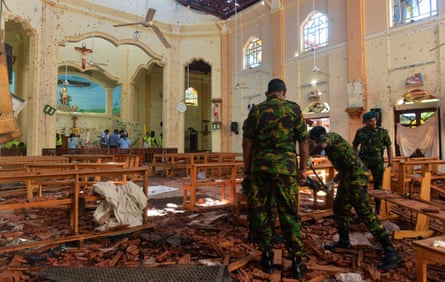
Haripriya Jayasundara, who led the prosecution, called for longer prison terms, saying the defendants were part of a well-planned attack carried out with the intention of killing Christian worshippers and tourists, which was proven by a video recording left behind by one of the suicide bombers.
The video, recorded the day before the bombings, showed the attackers with their faces covered, armed with rifles and swords and pledging allegiance to the then-IS leader Abu Bakhr al-Baghdadi to make Sri Lanka an Islamic nation and wage war.
“Finally, we have justice,” said Catholic priest Jude Fernando. “It has taken a long time to get to this point.”
However, the completion of the trial is unlikely to offer full closure for some. Sri Lanka’s Catholic church has long alleged that perpetrators put on trial were not the masterminds behind the bombings, and that there was a bigger state conspiracy behind the attacks.
A parliamentary committee found that police and intelligence officials failed to act on repeated intelligence warnings of the attacks.
In February, police arrested Suresh Salley, a former intelligence chief and retired army major general, alleging he had prior knowledge of the attacks and actively conspired to carry them out. He remains in custody but denies the charges.
In July, a former police chief and a former senior defence ministry official were sentenced to death for failing to act promptly on foreign intelligence warnings of possible attacks.
The country’s defence ministry has denied any involvement in the attacks.