Swimmers warned of toxic algae at newly designated Thames bathing site
Swimmers are being warned not to enter the water at the first official bathing site on the River Thames, in south-west London, because of toxic blue-green algae in the water.
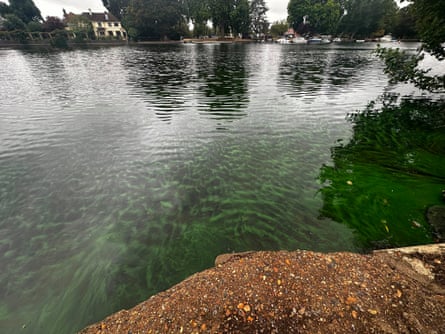
The blue-green algal blooms are rare in moving water but are likely to be caused by the extreme heat, low river flow, and nutrient pollution from sewage waste.
Thames Water’s Hogsmill sewage treatment plant, in Kingston upon Thames, is situated three miles upstream of the Ham bathing site.
The algae discovery raises further questions about plans by Thames Water to pump 75m litres of treated sewage a day into the river near the bathing spot, in a water recycling scheme that is in the pre-application stage for a development consent order.
Marlene Lawrence, of the swimming group Teddington Bluetits, which successfully applied for the bathing water designation at Ham, said: “This is so unusual to get blue-green algae in a moving body of water. It is the first time in nearly six years of swimming here that this has happened.
“The river is very low-flowing at the moment because of the lack of rain and the high temperatures we are having. With climate change, this is likely to happen more.”
Thames Water’s recycling scheme has been opposed by the local Liberal Democrat MP, Munira Wilson, the council, and river users. But it has been designated a strategic infrastructure project, which means it can be pushed through over the heads of the local authority.
The £250m scheme involves abstracting 75m litres of water a day from the Thames at Teddington when the river is in low flow at times of drought, and replacing it with the same volume of treated sewage from the nearby Mogden sewage treatment works via a new tunnel.
The Environment Agency rejected a previous attempt to develop the scheme because the treated sewage would raise the temperature of the water during low flow, change the salinity of the river and adversely affect fish and biodiversity.
Campaigners argue that the recycling project will provide only 75m litres of water a day while putting the river under huge environmental pressure. This is a fraction of the 570m litres of water the company leaks every day.
Thames Water has been in breach of its permit conditions at its Hogsmill works, which means it has discharged raw sewage in breach of the law.
The company, which is £20bn in debt, had promised to upgrade the Hogsmill works last year as part of key environmental improvements, but it was one of more than 100 projects the struggling water company has postponed, and is now unlikely until 2028. The failure to upgrade the infrastructure is being investigated by the regulator, Ofwat.
Lawrence said: “What Thames Water are planning to do – abstract river water when the river is at very low flow in drought and replace it with treated effluent – will make the river temperature at least 1C higher than before and put it under extreme environmental pressure.
“The presence of this blue-green algae already shows that the river is under stress from the drought and high temperatures.”
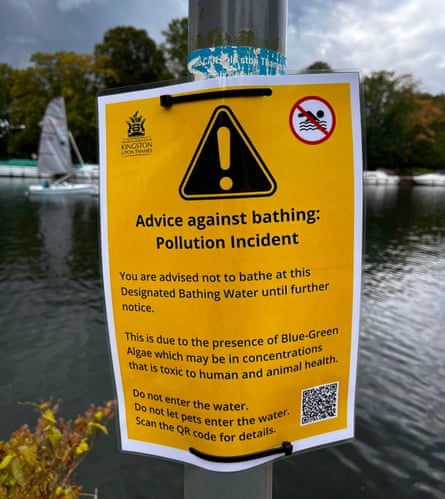
The Environment Agency, which tests bathing water areas in England, has put up a sign at the swimming spot to warn swimmers. It reads: “Do not enter the water. Do not let pets enter the water.”
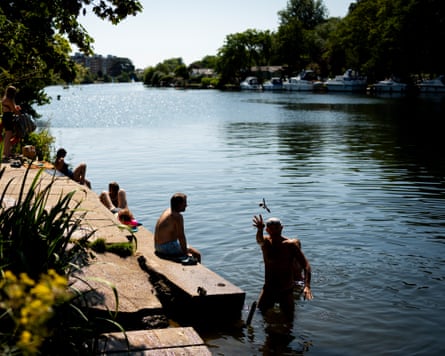
The bathing spot, designated in May under the EU water framework directive, was the first on the Thames in London.
Swimmers across the country are applying for bathing water status in rivers in an attempt to encourage a cleanup and highlight the scale of sewage pollution by water companies discharging raw and treated waste. Rivers are suffering from a toxic cocktail of sewage discharge, forever chemicals and road and agricultural runoff.
Bathing water status requires more rigorous testing by the Environment Agency, which is required to monitor the water for faecal indicator organisms. Water companies have come under pressure to cut sewage pollution in areas designated for bathing.
A Thames Water spokesperson said: “We would like to reassure river users that our proposed Teddington direct river abstraction project would not deteriorate water quality and would be required to meet strict environmental and water quality standards set by the Environment Agency.
“The new treated water outfall would also be located downstream of the proposed bathing water site, meaning recycled water would flow downstream over Teddington Weir into the tidal Thames.”