Why are deaf audiences still treated as an afterthought in theater and cinema?
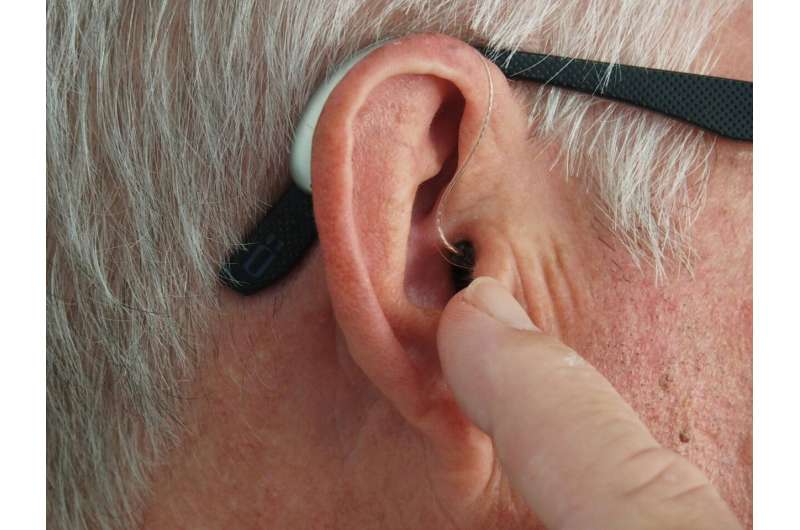
In this article, deaf is used as an umbrella term to include Deaf, deaf, hard of hearing, hearing-impaired, deafened and people with hearing loss.
Theater and movie theaters are increasingly lauding their commitment to access and diversity, yet deaf people are still excluded from most performances and films.
Many theater performances are not captioned or British Sign Language (BSL) interpreted, and if they are, theaters typically offer one captioned and one interpreted show in a run, regardless of the number of performances.
Most films are distributed with caption tracks, but movie theaters, on average, caption only 1% of all showings. This is despite statistics showing that in the UK, 1 in 7 people—approximately 14% of the population—are deaf or have hearing loss.
This is not meaningful inclusion; it is managed exclusion and amounts to what is termed "deafwashing."
As a deaf/deafened researcher, a lifelong theatergoer and amateur performer, I have spent years watching accessibility being treated as a specialist add-on rather than an integral part of arts and culture. Theater was once one of the places where I felt most connected to the wider world. Now, however, access barriers have made participation almost impossible, transforming what should be a positive social experience into a demoralizing logistical challenge.
The issue matters for reasons that extend beyond the arts. Worse mental health among deaf people is well documented, with higher rates of conditions such as depression and anxiety and a higher prevalence of social isolation and loneliness.
Prevalence of mental health problems in deaf children has been found to be twice to four times as high as among their typically hearing peers. Social exclusion—defined as exclusion from economic, social, political and cultural life—is considered a key driver of these disparities.
A profound connection
Going to the theater, movie theater or a live performance is not simply entertainment. It is a way of connecting with others, participating in shared conversations and feeling part of a community.
Restricting access for deaf audiences is often justified through claims that accessibility features are distracting, aesthetically intrusive or unwanted by general audiences. Such assumptions persist despite a lack of evidence to support them.
Some movie theaters have begun offering captioning glasses, which are a welcome improvement on a complete lack of access. However, these solutions still risk stigmatizing deaf audiences, and some may feel uncomfortable wearing them and being visibly singled out.
In fact, many hearing people also find captions helpful or even necessary, including neurodivergent people, those with developmental conditions, older adults and non-native speakers. More broadly, captions can support understanding of complex or fast-paced dialogue. Given the widespread demand for captions, it is unsurprising that global platforms such as YouTube and TikTok have made them standard. Why, then, do theaters and movie theaters continue to treat accessibility as an optional extra?
This exclusion stems from a long history of institutional exclusion. Accessibility is frequently viewed through the lens of accommodation rather than inclusion: Accommodation asks how institutions can make occasional adjustments for a minority group, positioning inclusion as a burdensome add-on.
Inclusion, by contrast, asks how environments can be designed so that a wider range of people can participate from the outset. This is embodied in the concept of universal design: designing with built-in access for everyone rather than additional special features for disabled people.
A recent production of Under Milk Wood at Theatr Clwyd in Wales ably demonstrates how theater can successfully incorporate deaf inclusion. Created by Craidd, a collaboration of Welsh theater companies, the performance integrated captions, BSL interpretation and audio description into the artistic fabric of the show.
The captions moved and performed alongside the action, almost becoming supporting actors, while the BSL interpretation bounced between the cast, fully immersed in the performance. Far from being an unwelcome distraction, this enhanced the performance for all audiences, providing additional textual, visual and emotional interpretations alongside traditional spoken words and acting. This is supported by research showing that visually rich and emotionally attuned captioning augments comprehension and emotional engagement.
Sara Beer, director for change at Craidd, notes: "Lots of people liked the captions—even those without hearing loss—because they helped them make sense of what was happening. It's another way of telling the story, and lots of people like it even if they don't need it as an access requirement."
The question, then, is not whether accessibility in the arts is possible—we know it is.
"It's about deciding at the start what access will work best for the production, not adding it on afterwards," says Beer. "It has a cost implication, but if you budget for it at the start in the way that you budget for everything, it just becomes what you do."
It is time that inclusivity became the norm rather than the exception. For deaf audiences, inclusion means more than being welcomed in principle; it means being able to attend performances with the same spontaneity and freedom as everyone else.
We need more deaf creatives in positions of genuine creative influence and need to move beyond measures that superficially support access but merely contribute to ableist norms being perpetuated. Access should be part of universal design, not an afterthought.
Who's behind this story?

BA art history, MA material culture. Former museum editor, paramedic, and transplant coordinator. Editing for Science X since 2021. Full profile →

Bachelor's in mathematical biology, Master's in creative writing. Well-traveled with unique perspectives on science and language. Full profile →
This article is republished from The Conversation under a Creative Commons license. Read the original article.
Citation: Why are deaf audiences still treated as an afterthought in theater and cinema? (2026, August 6) retrieved 6 August 2026 from https://phys.org/news/2026-08-deaf-audiences-afterthought-theater-cinema.html
This document is subject to copyright. Apart from any fair dealing for the purpose of private study or research, no part may be reproduced without the written permission. The content is provided for information purposes only.