Actors on stilts join Broadway union workers during a demonstration to vote on whether to authorize a strike in 32 Broadway theatres ahead of the holidays season, in New York, December, 12, 2012. Broadway theater cleaners, porters and matrons gathered on New York's Times Square to decide on wether to authorize a strike, calling on theatre owners to pay higher wages and provide access to healthacare and other benefits. AFP PHOTO/Emmanuel DUNAND (Photo credit should read EMMANUEL DUNAND/AFP via Getty Images)
A team of researchers at the University of Ottawa and its Nexus for Quantum Technologies Institute, in collaboration with researchers from Federico II University in Italy, has developed a programmable quantum simulator that shapes a beam of light to replicate how particles move through complex materials, avoiding the need for ever-larger electronic hardware.
Ready meals containing fish and seafood can expose consumers to chemical contaminants that are present in the environment or introduced during processing and packaging. A study by the Universitat Rovira i Virgili (URV) has, for the first time, analyzed the presence of a wide range of high-volume chemical substances in ready-made fish and seafood dishes sold in Tarragona, Spain.
An illustration of the researcher's optical setup. Similiar to a traditional eye exam, participants viewed the structured light and answered questions about what they saw. Credit: Dusan Sarenac / University at Buffalo
Modern life depends on quantum physics. It makes technologies such as GPS navigation, MRI scanners and computer chips possible. Now, the same science may also lead to a new way to test the health of our eyes. A University at Buffalo-led team has used a technique from quantum optics to make a little-known visual pattern produced inside the eye easier to see—potentially opening the door to a new way to test retinal health.
When Iran faced an all-out war against the United States and Israel, Tehran did not respond with missiles and drones alone; it shut down the Strait of Hormuz, a vital waterway for global energy.
Five Guatemalan nationals have now plead guilty in the migrant smuggling case linked to the deaths of 55 migrants.
Two more Guatemalan men have pleaded guilty in the United States to charges related to a human smuggling operation that resulted in a 2021 truck crash in southern Mexico, killing 55 migrants.
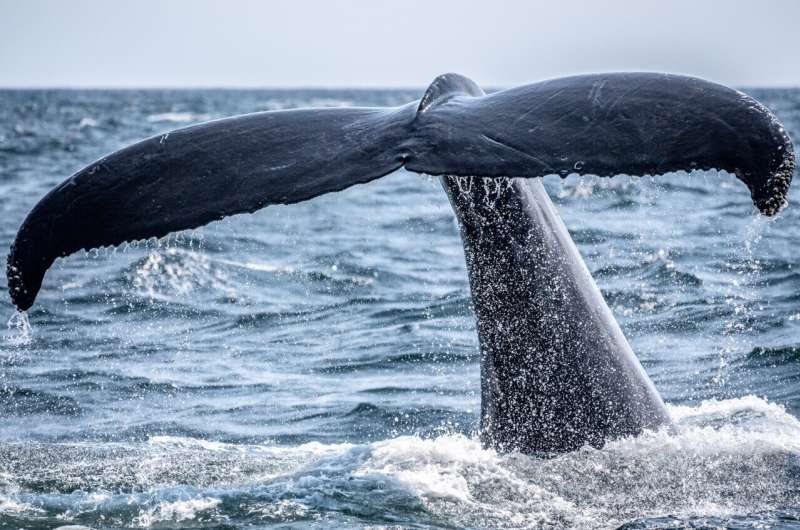
A single monitoring network developed by McGill, Natural Resources Canada, Université du Québec à Montréal (UQAM) and Dalhousie University researchers can simultaneously track earthquakes, water behavior, human activity and whales, providing a comprehensive picture of what's happening in, under and far from the water. The research is published in the journal Seismica.
This schematic shows how SAXS and SANS revealed complementary details about different drug delivery nanoparticles. SAXS helped determine the overall particle shape and dimensions, while SANS provided additional contrast to probe the internal structure. The numbers indicate dimensions in nanometers. The different structures reflect differences in nanoparticle composition: Tween and TPGS are surfactants used to stabilise the particles, and the study showed that changing these surfactants can alter particle shape, size distribution, and internal organization. Credit: Small Methods (2026)
Modern medicine increasingly relies on targeted drug delivery—a process during which tiny particles (nanoparticles) transport drugs to specific parts of the body. To ensure these treatments are safe and effective, scientists need to understand exactly how these nanoparticles are built—including their size, shape, and internal structure.