Amazon is getting into the crypto game, kind of, though it may have picked the wrong partner.
Propagate and Amazon MGM Studios have teamed on the three-part Sam Bankman-Fried documentary series The Boy Who Stole Billions?, which is set for a November release, The Hollywood Reporter has learned. The question mark in the title is doing some serious work here.
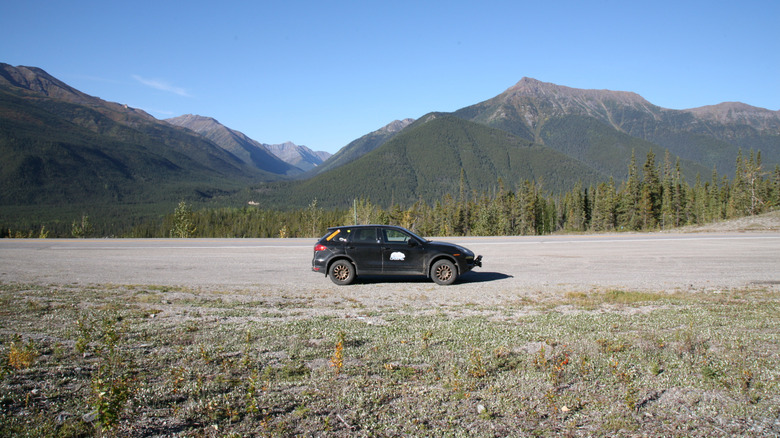
I recently became educated to the fact that the most remote location in the lower 48 United States is found in the deepest depths of Yellowstone National Park. Just a few miles east of the Continental Divide on the southern end of the park is a documented area that is 21.7 miles from a road of any kind. You only need to go 21.7 miles to be as far from a road as you can anywhere between the 49th parallel and the Rio Grande. Venture to the north of the border, into the depths of Canada and Alaska, however, and you'll quickly find yourself in locales more remote than you might have thought possible.
UK special forces (UKSF) personnel could face prosecution after evidence found following enquiries by the SAS Inquiry, suggesting serious offences may have been committed in Afghanistan, was handed to the military police.
The Franco-American Cultural Fund (FACF) has unveiled the full lineup of films and series for the 30th American French Film Festival (TAFFF), which will compete for the TAFFF Awards.
The fest, running Nov. 3-8 at the Directors Guild of America (DGA) Theater Complex on Sunset Boulevard, will screen international feature film contenders galore, from Minotaur and Fjord to All of a Sudden. Overall, it will showcase 60 films and series.
There is an alternate universe where Warner Bros. Discovery swallowed Paramount. Little did they know that two years later it would be Skydance’s David Ellison who would own both companies.
London, United Kingdom – The deadline Israel imposed on the United Kingdom to close its East Jerusalem consulate is fast approaching.
Thursday marks 30 days since Israeli Foreign Minister Gideon Saar’s order, a retaliatory move against the UK’s wave of sanctions targeting illegal Israeli settlements.
Visit my house, and I'll tell you all about my NAS. I don't mind if you tune out halfway through, I've got lots to say about Jellyfin, Tailscale, and Docker. I just want to talk to someone, anyone, about my NAS. Please, my NAS.
When it comes to their love lives, young people are leaning into the mystical.
Manifestation, psychics, astrology, tarot cards, love spells — 64% of Gen Z and 51% of millennial adults have tried at least one, according to a new survey of 1,013 Americans ages 18 to 60 by DatingNews (with an estimated margin of error of ±3.1 percentage points at the 95% confidence level). That compares with 25% of Gen X and 12% of Boomers.